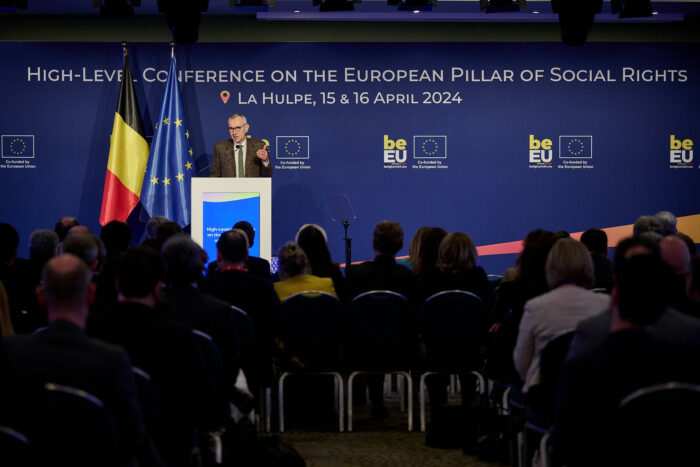
A high-level roundtable organised by FEPS, the Initiative for Policy Dialogue, Friends of Europe and the Financial Times
Bibliothèque Solvay, Brussels | 12 October '09
09:00-17:30
[check pressroom for release] [photos of the event]
In the wake of the financial turmoil and despite massive liquidity injection provided by public institutions, the banking sector remains unstable. Taking into account the G20 Summit's request to introduce counter-cyclical buffers, the roundtable will debate how to reform the pro-cyclical Basel II banking supervision agreements.
It offers the opportunity to consider the lessons learned from national experiments with counter-cyclicality in both developing and developed countries while discussing the necessity of capital cushions to make the banking sector more resilient in the face of future instability.
The event will bring some 40 high-level experts, policymakers, business leaders, bankers and social partners from all over the world, as well as a number of top representatives from emerging countries. Will be present, among others: Joaquin Almunia (Commissioner for Economic and Monetary Affairs), Poul Nyrup Rasmussen (President of the Party of European Socialists), Yaga Venugopal Reddy (Former Governor of the Reserve Bank of India), Joseph Stiglitz (Nobel prize in Economics 2001), Stephany Griffith-Jones (Head of Financial Markets of the Initiative for Policy Dialogue at Columbia University), Stefan Walter, Secretary General of the Basel Committee on Banking Supervision.
50 discussants will sit around the table. Their backgrounds will cover the wide array of stakeholders involved in finance, they will be policymakers, business leaders, MEPs and social partners' representatives from all over the world.
Some 100 observers will attend the debate and will include European and international press.
Each session will be opened by introductory discussants, delivering short, sharp remarks. Then the moderators will kick off the debate by taking comments from the discussants and putting questions to them. The style will be informal, spontaneous, with no room for prepared speeches. We want round table participants to engage in a lively exchange of opinions. A rapporteur will write a summary of the debate, which will be largely disseminated.