The economic theory underlying the conservative views on economic policy has no scientific foundations, "the Emperor has no clothes". Despite their trust in such models it has never been demonstrated that the economic system, independently of any external intervention, could produce an acceptable social order. Nobody has been able to show that the economy, through the intermediation of the markets, could reach a state of rest satisfying individual desires. On the other hand, it has been proven that this axe of research had to be dropped because of its internal inconsistency. Consequently, the rhetoric on the necessity to liberalise markets has therefore to be interpreted as a political ideology. Our view of the functioning of the economic system is in sharp opposition to this statement. [+]
|FIN| [Europeans for Financial Reform Coalition: Response to the IMF Consultation]
Document prepared by FEPS for the Europeans for Financial Reform campaign of the Global Progressive Forum, January '09
When the G20 leaders tasked the IMF “to prepare a report for our next meeting with regard to the range of options countries have adopted or are considering as to how the financial sector could make a fair and substantial contribution toward paying for any burdens associated with government interventions to repair the banking system”, one must state that this process has to be redistributive, through fiscal policies and financial regulation. One of the strongest instruments would surely be a global financial transaction tax. Such a tax would limit the size of financial sector and allow a stabilisation of financial markets. It will represent a way of sharing the burden of the crisis and give responsibility to the financial sector and, in future, raise a permanent income from the financial markets to the real economy.
Right from the beginning FEPS joined Europeans for Financial Reform, the coalition of progressive forces seeking to create a common platform for a new banking and financial system.
[+] |FIN| Towards Basel III: regulating the banking sector after the crisis
Report from the [conference] held at the Bibliotheque Solvay, Brussels on 12 October, 2009
A roundtable discussion took place in Brussels on 12 October, 2009 with the aim of producing concrete proposals on how banking could be reformed to prevent a systemic collapse on the scale witnessed almost exactly a year before. The current crisis represents a one-off opportunity to reshape the banking sector and impose a degree of control over it that will, discussants hoped, reduce future danger to the financial system and help set the global economy on a path to sustainable growth.
A majority of discussants thought that regulation should now be comprehensive across countries and institutions. A crucial aspect of any new regulation should be counter-cyclical measures.
[+] |FIN| Reforming the US financial architecture: the regulation of derivatives, ratings agencies and hedge funds
A study by Stefano Pagliari, Visiting Scholar at the Initiative for Policy Dialogue @ Columbia University, New York | January '10
In the last couple of years, financial regulatory reforms have occupied a pivotal place in the agenda of policymakers in the European Commission, European Parliament, and member states. However, the course of action of European institutions has constantly been influenced by parallel regulatory initiatives in the US. This working paper tries to make a contribution to this debate by analyzing the reform proposed and implemented in the United States to regulate three important sets of actors and markets in the global financial market: derivatives, credit rating agencies and hedge funds. Despite these three sectors having played a very different role in the context of the crisis, they have been, in a short period of time, the objects of very extensive reforms in the way they are regulated in the US. Nevertheless, the crisis has led regulators to abandon the soft-touch approach to the regulation of financial markets that characterized the decade prior to the crisis and to extend their regulatory oversight to new markets and instruments that had been left only loosely regulated or self-regulated.
[2010 releases] [2009 releases]

Economic recovery plan wrap-up conference
Brussels | 18th November '09
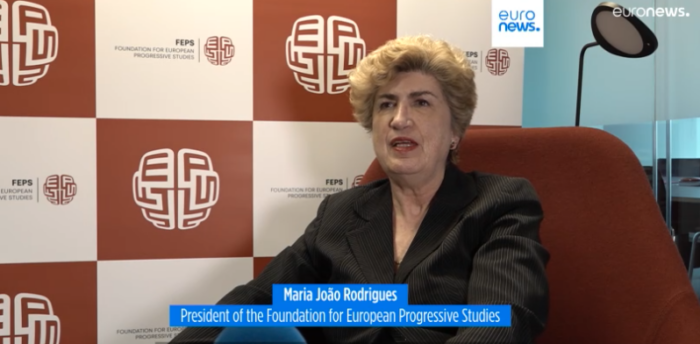
After a dozen of seminars held in Europe, this wrap-up conference brought together all those who contributed to the discussion around, amongst others, Maria João RODRIGUES and Joaquim ALMUNIA. [+]

Towards Basel III: Regulating the financial sector after the crisis
Brussels | 12 October '09
Taking into account the G20 Summit's request to introduce counter-cyclical buffers, the roundtable, organised with the Initiative for Policy Dialogue, the Financial Times and Friends of Europe, discussed the ways to reform the pro-cyclical Basel II banking supervision agreements. The event gathered some 40 high-level experts, policymakers, business leaders, bankers and social partners from all over the world, as well as a number of top representatives from emerging countries. [+]