Since the beginning FEPS has been strongly involved in a debate on gender equality, which in fact was one of the very first projects that it established. This issue reviews the history of the struggle for gender equality in national member states, in Europe and elaborates on the progressive agenda for the future.
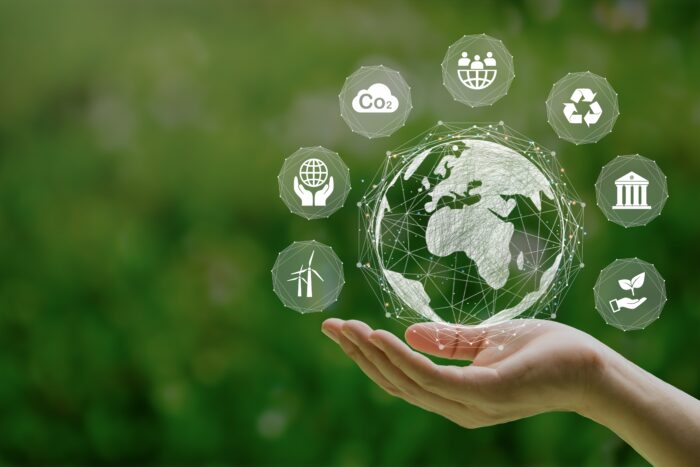
Michael Müller, former Parliamentary State Secretary, Minister for the environment, nature protection and reactor safety in Germany addresses the precarious position in which we find ourselves. Over this coming century we will either succeed in strengthening economic innovation by combining it with social justice and environmental sustainability; or economic and social inequality will rise, causing more crises and shocks. The article illustrates the crisis of the growth model and the need for a green revolution.
A new paper by the FEPS Economic Advisor, Dr Matthieu Meaulle addresses the risks posed by the trend towards austerity measures in Europe. The study entitled "Greece: Recovery, austerity and international imbalances" addresses the possible ramifications of such measures.
Two new studies from our international correspondents. In the first, Klaus Voll provides and analysis of the recent visit by High Representative Catherine Ashton to India. In the second Arnold Wehmhoerner describes the relation between leftist politics and the African National Congress during the premiership of Jacob Zuma in South Africa.
Two new studies have just been issued in the Next Left programme of FEPS. The first one, "Social democracy for the next generation: points for debate", aims at presenting methodological approaches ranging from sociology to anthropology in order to assess transformations of society. The second, "Methods for (s)electing a pan-European leading candidate" is a contribution to the reflexion on our political party system and on the future of participative democracy.
The members of FEPS elected, in unanimity, elected the former Italian Prime Minister as the first President of FEPS on the occasion of the 2010 General Assembly.
During a time in which the EU recommends that 23 out of the 27 EU countries tighten fiscal policy, this paper looks at alternative approaches. FEPS and ECLM look the potential for the EU reforming itself out of the crisis, with a more benign outcome for employment and social justice.
26 July '10 | The Foundation for European Progressive Studies (FEPS) currently has a vacancy for a temporary full-time contract from September – December 2010. The position will be coordinator of projects in economy. [apply]